
The Demon at the Gate
Maxwell’s demon, the Jubilee, and the choice between forgiveness and sacrifice

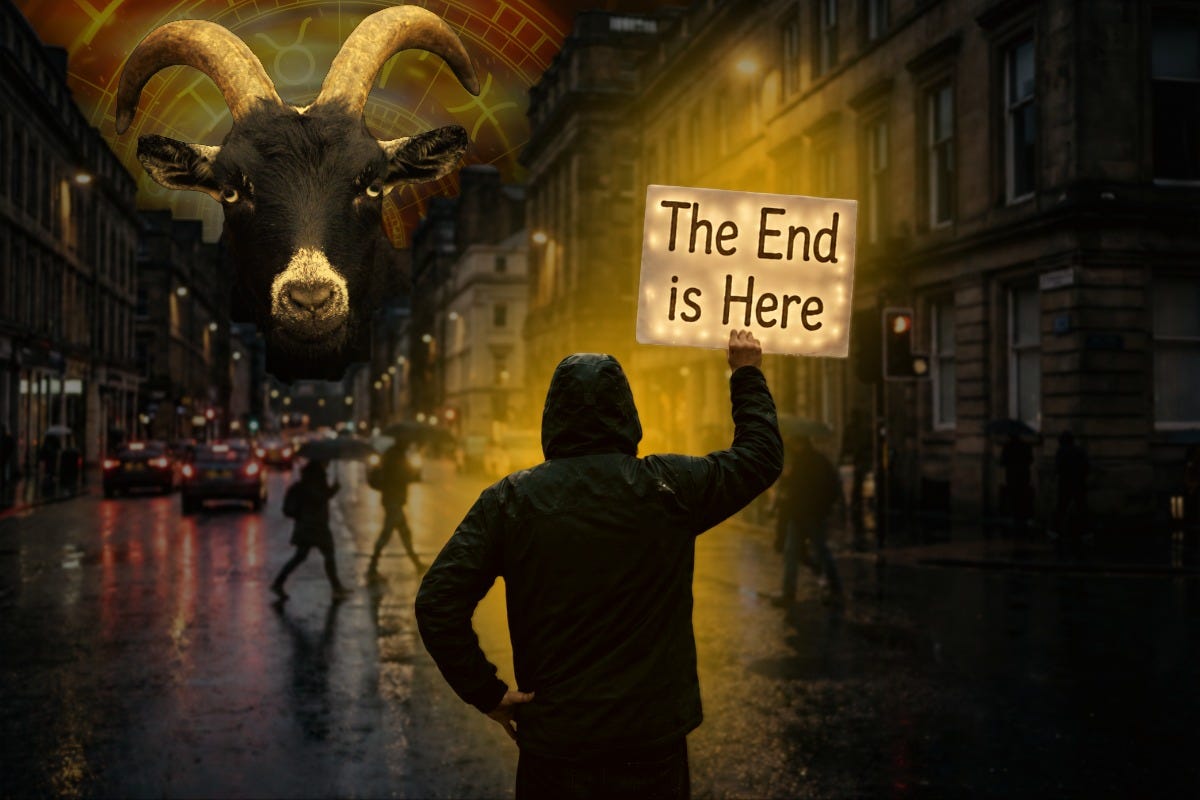
The gate is a powerful archetype. It is the place where living energy changes hands and becomes something that can be counted, stored, and controlled.
Every civilization builds its gates, and every gate has its keeper. In the ancient world, grain enters the temple and becomes tribute, as detailed in a previous article. Silver enters the ledger and becomes credit. Prayer passes through the priest and becomes blessing. Labor passes through the market and becomes wage. Our own world is gated more heavily than any before it. Biological life passes through the laboratory and becomes data. Speech passes through the platform and becomes influence. Memory passes through the archive and becomes record. The gate is everywhere, in every age, wherever the raw flow of life is converted into something manageable, which is to say controllable.
At every gate, there is a figure standing in front of it.
I have been calling that figure the “broker class,” and across these pieces I have tried to show you that it is not a metaphor and not a single conspiracy but a structural position that civilization keeps regenerating. The priest, the banker, the platform, the intelligence handler, the algorithmic manager, the financial engineer.
They have one thing in common: they did not create the energy passing through the gate. They control the passage, and they charge rent on it.
For a long time this appeared to work, which is exactly why it is so dangerous. The gatekeeper takes his cut, and the system keeps running, and almost no one notices the slow change in the direction of the flow. So let me begin where it matters. What happens when the gatekeeper starts taking more than the system can afford to lose? The short answer is the one this whole essay is built to earn: sooner or later the civilization has to choose between forgiving the debt and finding someone to blame for it, between the clean slate and the sacrifice.
The Captured Middle
To fully answer, you have to understand why the position at the gate is so powerful in the first place, and the answer is older than economics. It goes back to the simplest philosophical fact about relations.
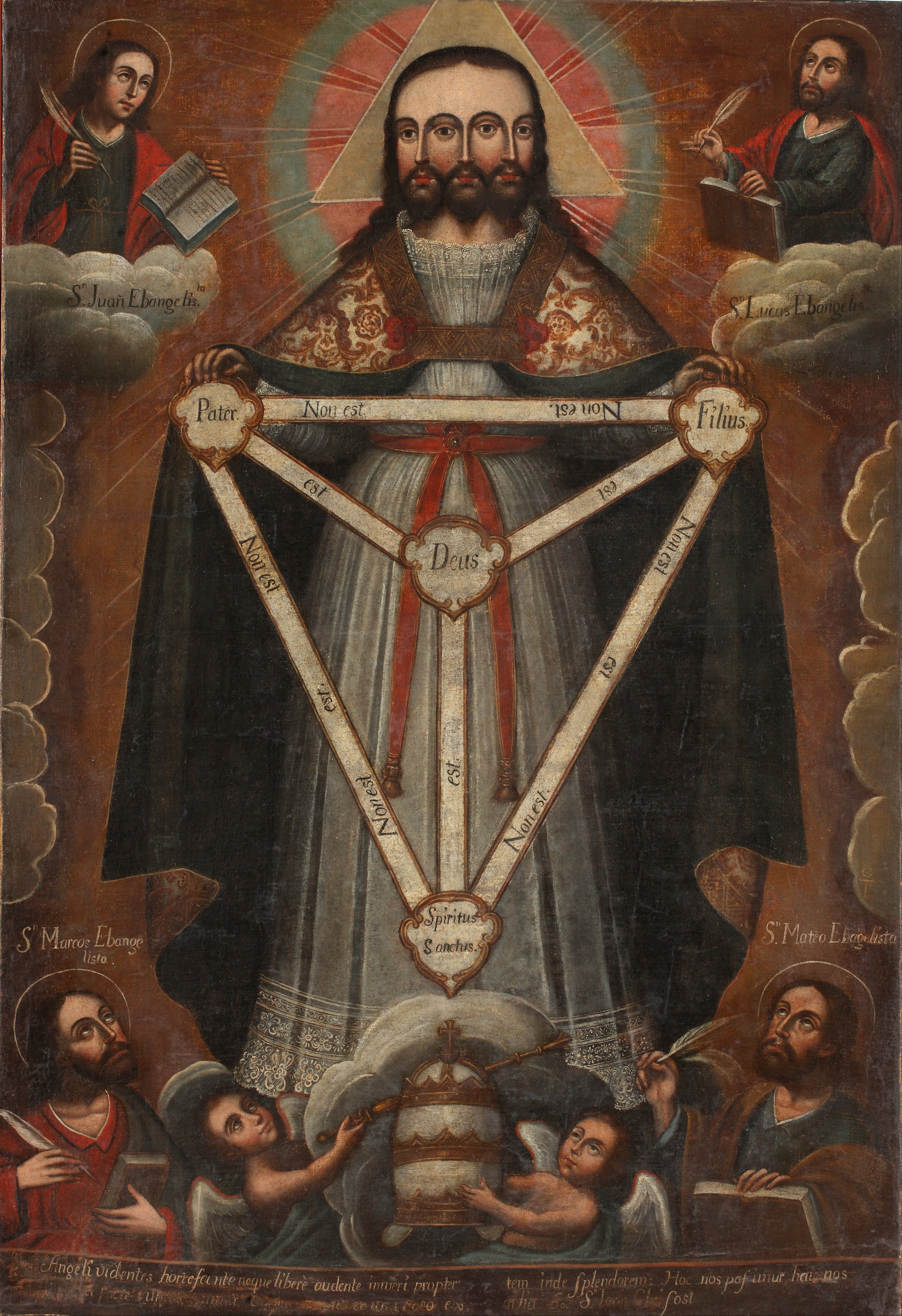
The number 1, the Monad, is unity before anything has split. Two, the Dyad, is the arrival of otherness, the unstable pair. Three, the Triad, is the first resolution, the form that can hold division without being destroyed by it.
This is one of the most stubborn structures in human thought, and it surfaces wherever anyone has tried to explain how the many comes from the one without simply shattering. The Neoplatonists built reality out of it: the One, the intellect that flows from it, and the soul that turns back toward the source. Traditions reach for the triad again and again to think through relation, generation, and restoration, from the Egyptian Osiris, Isis, and Horus to the Christian Father, Son, and Spirit, where the third is what binds the other two into one. (Hegel would later make the same move the engine of history, two opposed forces lifted into a higher unity that preserves them both, what he called sublation.) Conceptually, the third is where the power sits, because the third is what makes the other two into a whole.
Now, someone will object, rightfully, that two parties do not need a middleman. A buyer and a seller can meet face to face. A worshipper can pray directly to God without a priest. A speaker can address a crowd with seemingly nothing between them.
That is true, but here is what is also true. Every relation requires a medium. Not a middleman, a medium: something that carries one side across to the other so the relation can happen at all. Speech is a medium. So is money. So is trust, and law, and a shared unit of measure, and the ritual that lets two strangers deal with each other without reaching for a weapon. The medium is the air the relation breathes. Take it away and the two poles cannot reach each other; they collapse into confusion, or force, or raw appetite.
This is why the word itself matters. A medium is the thing in the middle, the thing that carries one side to the other. Speech is a medium, and so are writing, ritual, money, and the server humming in a data center. A body can be a medium; so can a priest, a bank, a platform, a camera. The whole family of the word points the same way: to mediate is to stand in the middle, a mediator is the one who comes between two sides, an intermediary is that middle made into an institution. Even median and Mesopotamia carry the echo, the line in the middle, the land between the rivers.1 Somewhere along the way, “the media” stopped meaning only newspapers and television. That old category is too small for what now stands between us and the world. We still do not know what to call these platforms, because they keep changing costumes depending on the question being asked. Are they publishers? Are they neutral carriers? Are they private companies exercising editorial judgment? Are they public squares? Are they even responsible for what passes through them?
The fact that we cannot answer cleanly should tell us something.
The platform is not only carrying the message. It is sorting the message, ranking it, burying it, amplifying it, monetizing it, attaching it to identity, and deciding whether it will remain in the record at all. The speaker reaches the audience through it. The witness reaches the public through it. Even the present reaches the future through it, because the medium is where memory is stored. The danger begins when the medium is captured, when the thing that was supposed to carry the relation begins to own the relation. At that point, the bridge becomes a checkpoint. That is where power enters, and with power, corruption.
The Demon at the Gate
In 1867 the physicist James Clerk Maxwell imagined a small being and very nearly broke one of the deepest laws in physics with it. Lord Kelvin later named the creature a demon, and the name stuck: Maxwell’s Demon.
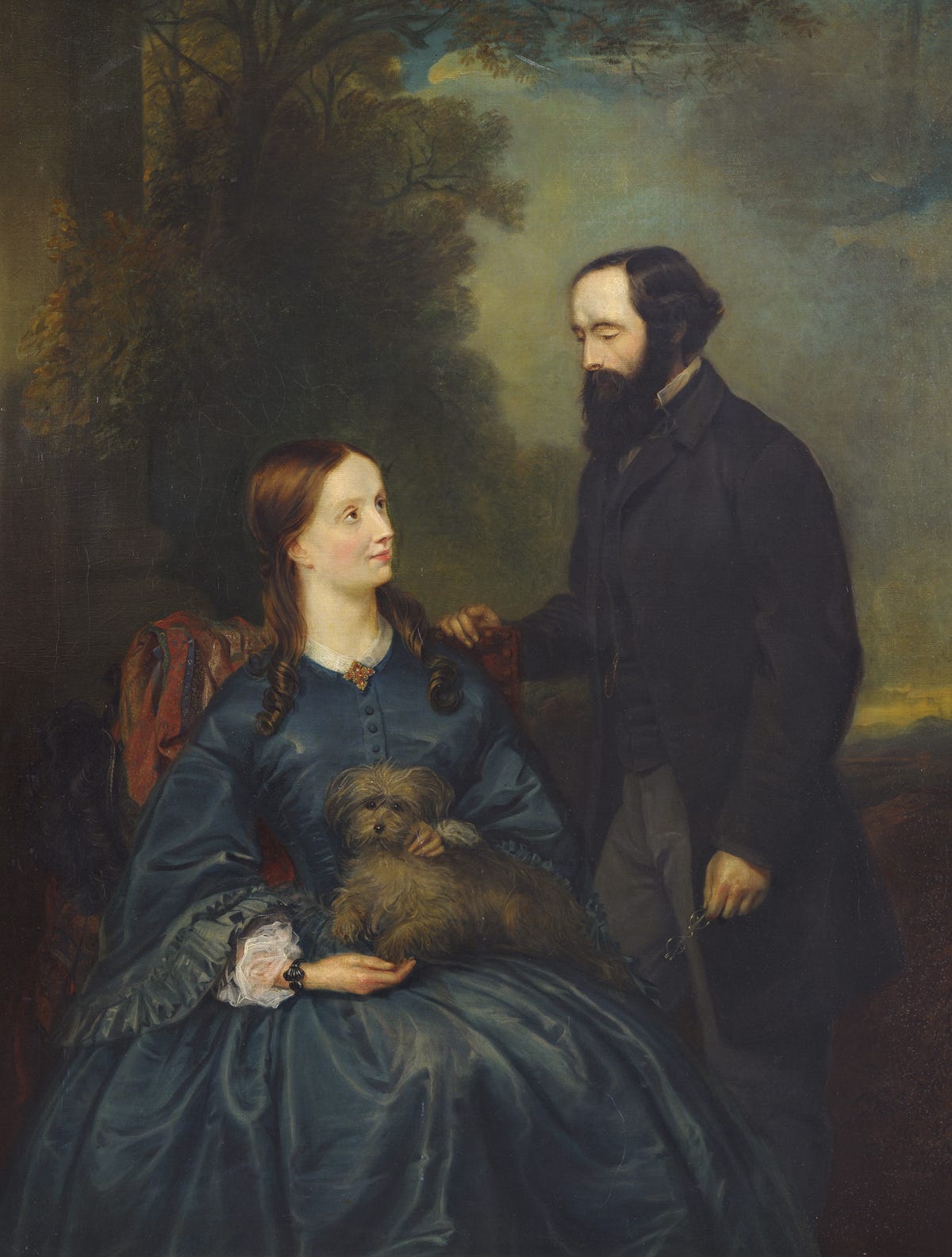
Picture a box of gas divided into two chambers by a wall with a tiny door in it. The gas starts in equilibrium, the same temperature throughout, which only means the molecules are moving at a spread of speeds, some fast, some slow, evenly mixed. Now station at the door a being quick enough to watch individual molecules. When a fast one approaches from the right, he opens the door and lets it through to the left. When a slow one approaches from the left, he lets it through to the right. He spends no energy doing this; the door is frictionless. He only watches, and sorts.
Slowly the left side fills with fast molecules and grows hot, the right fills with slow ones and grows cold, and a temperature difference appears out of nowhere. A difference is usable. You can run an engine off it. The demon has conjured extractable work out of equilibrium, for free, by doing nothing but standing at a gate and deciding what passes through.
